Welcome!
Our mission is to help you consciously create your reality in ways you find fulfilling—find out more.
NEW! Starman: My Life and Afterlife
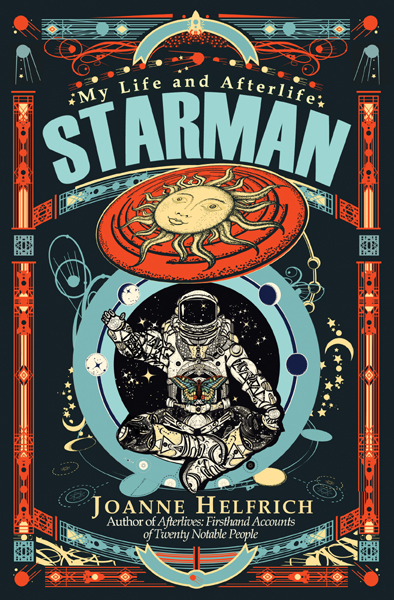 Starman is the result of Joanne Helfrich’s request to speak with beloved rock star David Bowie (1947-2016) about the real facts of life, death, art, music, creativity, sex, drugs, and rock and roll. Starman speaks to young adults starting their spiritual journey and anyone seeking new, creative ways of being. Starman will help you to…
- Know why love is so important in this physical world and beyond it
- Sense the reality of the afterlife and the beauty of the physical world, made exactly for you
- Appreciate and heal yourself through music
- See your challenges as reason to change and grow, not to take your life
- Know that Divinity—or whatever you want to call it—is in each individual and you, too
- Have fun expressing who you are, however outrageous!
Seth Revealed: Unlock the Secrets of Conscious Creation
 Seth Revealed On Demand is a comprehensive overview of the 46 books by Seth and Jane Roberts that provides a practical, easy-to-follow introduction to Seth’s core ideas and transformative exercises. Originally a popular live course for participants around the world, you can now experience it at your own pace—at any time, on any smartphone, tablet, or computer—and enjoy the same safe and comfortable environment for exploration!
This unique learning experience provides eight (8) 2-hour prerecorded class sessions, eight (8) downloadable MP3 podcasts of each class, access to our private Community Forum and virtual Rendezvous, that all work to foster transformative insights and personal growth.
Afterlives: Firsthand Accounts of Twenty Notable People
 AFTERLIVES by Joanne Helfrich is a startling collection of afterlife accounts from some of the most extraordinary people of our times: Anthony Bourdain, Hunter S. Thompson, Ayn Rand, Martin Luther King, Jr., Harriet Tubman, John Barron (former slaver), Thomas Paine, Johann Wolfgang von Goethe, Albert Einstein, Carl Jung, Hildegard von Bingen, Paramahansa Yogananda, J.D. Salinger, George Harrison, Douglas Adams, James Baldwin, Kurt Vonnegut, Aldous Huxley, Robin Williams, and Jane Roberts, author of the Seth Material.
The authors reflect on their lives, describe their afterlife experiences, comment on world events, and share their stunning perspectives on the nature of reality. AFTERLIVES is evidence that there is life after death, that we are surrounded by helpful spiritual energies, and that life is precious and limitless.
Feelings Explained, Emotions Tamed
 Why do we get emotionally upset in certain situations for no good reason? How come certain people simply annoy us, no matter what they say or do? How can we better trust our impulses? What can we do to allow our emotions to flow through us without harming our self or others?
Our inner self is our font of wisdom and always has our best interests at heart, but the problem we all have when it comes to pursuing a happy and purposeful life is that we rarely listen to what our inner self is telling us about why we have certain feelings and what our emotions are trying to communicate. This book will help you bring clarity on what a feeling or emotion is telling you about your current situation—what you’re doing to yourself in the moment—and how to then address any negative feelings or emotions.
It’s About You! Know Your Self – new edition
 The ultimate guide to understanding your magnificent multi-dimensional Self–so that you can begin living a fearless, fulfilling life of contentment.
Why are you here in the physical world at this crucial and chaotic time for humanity? What if you were aware of your higher self’s spiritual reasons for being here? What if you could fearlessly pursue those things that excite your passions without worrying about money or whether you are worthy of doing so? What does it take to fully express your Self?
“Now more than ever before, we humans need teachers and guides grounded in an emerging truth we can trust. C.W.E. Johnson provides us here with an outstanding 21st-century metaphysical textbook to empower us to use more consciously our intention to change and enrich our lives and the reality we are manifesting.” – Jon Klimo – author of Channeling
Let That Shit Go: Learn To Process Loss and Be Happy
 What if life knows better than you do what you need? And what if everything—even loss—could contribute to your happiness? Wouldn’t that make the large and small losses you experience daily easier to take, and life itself a friend rather than an enemy? Yes it would. And Rose–channeled by Joanne Helfrich–is here to tell you how you can do this
The problem in not knowing how to process loss is what keeps millions of people suffering with anxiety, addiction, despair, and depression. But you don’t have to, because this little book will help free you from what makes you unhappy so you can live with joy and purpose.
The inspiring, often humorous wisdom and practices will help you feel better right away, clear your harmful habits of thinking, release guilt and regret, and find yourself in love with life again.
How To Be In Divine Love: 10 1/2 Principles That Will Make You a Happy, Purposeful Person
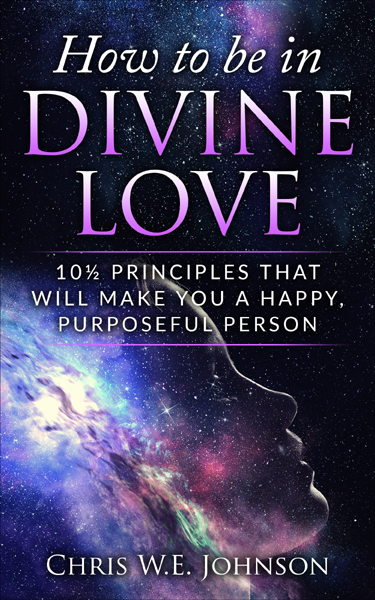 Move Beyond Occasional Happiness to Constant Contentment and a Blissful State of Being
Why is it that happiness always comes and goes—if it comes at all? How can you sustain a deep state of peace and contentment in an ever more frightening world? What does it take to uncover and fulfil your life’s unique purpose?
Chris Johnson’s latest book will help you to come to terms with our collective shift in consciousness and lay the foundations for you to ride the “Shift.”
You will learn of the absolute undistorted spiritual principles that steer the creation of your life’s reality.
These “natural” principles are not a set of laws or commandments from on high; they are a purified set of mental behavioral guidelines—unadulterated by institutional dogma. They are the human psyche’s translation of the universal force behind all creation—the vitality of Divine Love.